Should I use carbon fiber shoes?
Posted by Anthony Luke MD, MPH on April 16, 2026
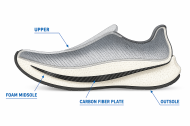
The Starting Line:
Are carbon fiber shoes good or bad for runners?
Carbon fiber plate running shoes have become increasingly popular because they can improve performance. Research suggests that carbon fiber plates embedded in running shoes improve running efficiency by about 1–3% in many runners, meaning less energy is needed to maintain the same pace. Studies on widely used models such as the Nike Vaporfly have shown measurable improvements in oxygen consumption during running, which helps explain why these shoes are often associated with faster race times.
At the same time, carbon fiber shoes do not benefit every runner equally. Some runners experience little to no improvement, while others may even perform slightly worse depending on their biomechanics, stride pattern, and the interaction between their body and the specific shoe design. This means the performance benefit is real, but it is not universal.
There are also potential injury trade-offs to consider. Carbon-plated shoes change how forces are transmitted through the foot and leg. Reports in competitive runners have described navicular stress fractures, a serious bone stress injury involving a small but important bone in the midfoot. Other research suggests that under fatigued conditions, these shoes may not attenuate impact as effectively as more traditional footwear, which could increase stress on joints and surrounding tissues.
For runners, the key message is that carbon fiber shoes may offer a meaningful performance advantage, but that advantage may come with biomechanical changes that could increase injury risk in some athletes. The balance between benefit and risk likely depends on the individual runner, training volume, prior injury history, and the type of shoe being used.
Finish line:
Carbon fiber plate running shoes can improve running economy and help many runners go faster, but they are not without risk. They may enhance performance while also increasing stress on certain structures in the foot and leg. For runners considering carbon fiber shoes, the potential gains should be weighed alongside possible injury concerns, especially when training volume is high or fatigue is a factor.
Illustration credit: Generated with ChatGPT (OpenAI).
References:
- Tenforde A, Hoenig T, Saxena A, Hollander K. Bone Stress Injuries in Runners Using Carbon Fiber Plate Footwear. Sports Medicine. 2023. https://pubmed.ncbi.nlm.nih.gov/36780101/
- Ortega JA, Healey LA, Swinnen W, Hoogkamer W. Energetics and Biomechanics of Running Footwear With Increased Longitudinal Bending Stiffness: A Narrative Review. Sports Medicine. 2021. https://pubmed.ncbi.nlm.nih.gov/33830444/
- Wang W, Potthast W, Torniainen K, et al. Performance Benefits Without Added Injury Risk? Effects of Advanced Footwear Technology on Running Economy and Biomechanical Risk in Recreational Runners. Scandinavian Journal of Medicine & Science in Sports. 2026. PubMed link not verified yet.
- Beck ON, Golyski PR, Sawicki GS. Adding Carbon Fiber to Shoe Soles May Not Improve Running Economy: A Muscle-Level Explanation. Scientific Reports. 2020. https://pubmed.ncbi.nlm.nih.gov/33051532/
- Luo X, Liu R, Li B. Influence of Carbon-Plated Running Shoes and Fatigue on Lower Limb Biomechanics. Journal of Biomechanics. 2025/2026. https://pubmed.ncbi.nlm.nih.gov/41389728/
Note: This general information is not intended to be a substitute for medical treatment or advice. Always consult a professional before making changes to your health and wellness practices.
Comments
View Posts by Category